
What’s Next After ACL Reconstruction?
An anterior cruciate ligament (ACL) injury is a common knee injury, especially among high-performing athletes. The ACL is one of multiple ligaments that stabilize the knee. An unnatural twist or collision can cause a ligament tear, leading to pain, swelling, instability, and difficulty moving pain-free. A complete tear of the ligament requires ACL reconstruction. The surgery replaces the damaged ligament, thereby restoring knee stability and function. While surgery is effective, this is only part of the process. A complete recovery
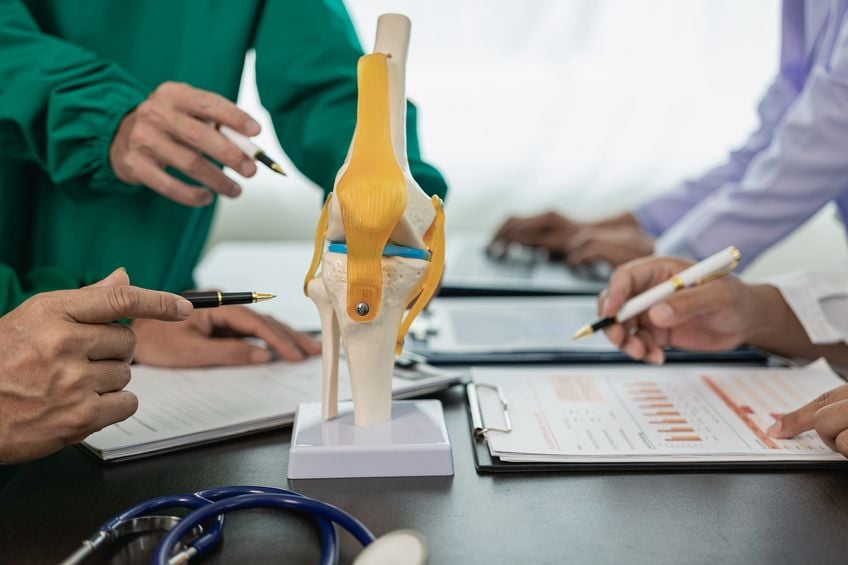
Understanding ACL repair
ACL repair uses a graft to replace the damaged ligament. This graft comes from donor tendon or tissue from a patient’s hamstring, patellar tendon, or quadriceps. The surgeon makes an incision along the front of the knee to access the damaged ligament. The ACL is removed, then small holes are drilled into the femur and tibia to secure the graft. The surgeon then secures the new ligament with screws or other fixation devices. Over time, the graft will biologically assimilate and become the new ACL. Surgeons now perform ACL reconstructions with minimally invasive surgery (MIS), which uses multiple small incisions the size of buttonholes. With MIS, patients experience less blood loss, smaller scars, faster healing, and fewer complications.
Why is it necessary?
ACL reconstruction is necessary to restore knee stability. The knee can ‘give way’ while walking or running, making peak athletic performance difficult. Patients who want to return to physical activity or sports, especially professional athletes, can use ACL reconstruction to safely do so. In some cases, the ACL injury is accompanied by other injuries like meniscus tears, which need surgical intervention. Surgery allows the reconstruction of the ACL and repair of nearby tissue, preserving the knee and preventing further injury. An orthopedic surgeon will assess all factors with the patient before recommending ACL reconstruction.
Typical recovery timeline
The ACL reconstruction recovery process is lengthy and varies based on the long-term goals of the patient. Recovery begins immediately after surgery, starting with pain management and reducing swelling, which can take up to 2 weeks. The rehabilitation process also starts after 1 week with a series of exercises to restore full knee extension and quadriceps strength. Therapy is progressive, with each week adding variation, cardiovascular exercises, or resistance to improve strength and mobility. Running and sport-specific drills can take 3-6 months. Patients will gradually add agility and controlled drills. A full return to sports requires even more time, with the total recovery time being 9-12 months, depending on the contact sport.
Speeding things up
While statistics do show patients need at least 9 months to fully recover, there are ways to speed up healing. Some factors, such as patient age, baseline fitness, and adherence to rehabilitation, influence recovery speed and outcomes. Rehabilitation adherence and intensity, in particular, can shorten the recovery process. Doctors recommend habits that can boost healing and recovery. For instance, a diet high in lean protein, healthy fats, and fiber improves healing and reduces inflammation. Studies show that optimizing sleep can speed up the healing of orthopedic surgery. Adding vitamin C, zinc, and omega-3 supplements during the recovery period can provide the body with additional nutrients for surgical healing. Taking a comprehensive approach may reduce this timeline.
Know your timeline
ACL reconstruction can help patients with a severe ACL injury. By replacing the damaged or torn ligament, the knee regains the stability necessary for sporting activity. Patients choosing ACL reconstruction must be prepared for a lengthy recovery. The new ligament takes time to acclimatize to the joint. Extensive physical therapy is also necessary to restore strength, mobility, and explosiveness. Recovery can take up to 6 months to return to activity and additional time to return to sports. A strong plan and support system can make this process easier.
Recent Posts

Shoulder Labral Tear Symptoms: When To Consider Surgery
A shoulder labral tear causes significant pain. Look for these symptoms and the criteria for pain-relieving surgery.
Partial vs Total Knee Replacement: Which Is Right?
Partial and total knee replacement can provide substantial relief. Learn which is best for long-term results.
Hip Arthroscopy: Can It Treat Labral Tears And Impingement?
Hip labral tears and impingement may need surgery. Hip arthroscopy is an effective, long-term treatment option.

Meniscus Tear Surgery: When Should Patients Consider Repair?
Meniscus tear surgery is a major decision. Learn the factors that help patients to consider surgical repair.