
Undecided About Your Knee Replacement?
There comes a point where chronic knee pain and arthritis no longer respond to conservative care. The patient has severe pain and even limited mobility that impacts everyday function. A doctor or orthopedic surgeon may recommend surgery in the form of knee replacement. This surgery removes damaged bone, cartilage, and ligament and installs a prosthesis made of durable material. Along with choosing knee replacement comes the question of the type of surgery that is best. Partial and total knee replacement (TKR) are presented as options. Understanding the difference between surgeries will help potential patients make the right choice. Choosing correctly directly influences pain, knee function, mobility, and lowers the risk of future surgeries.
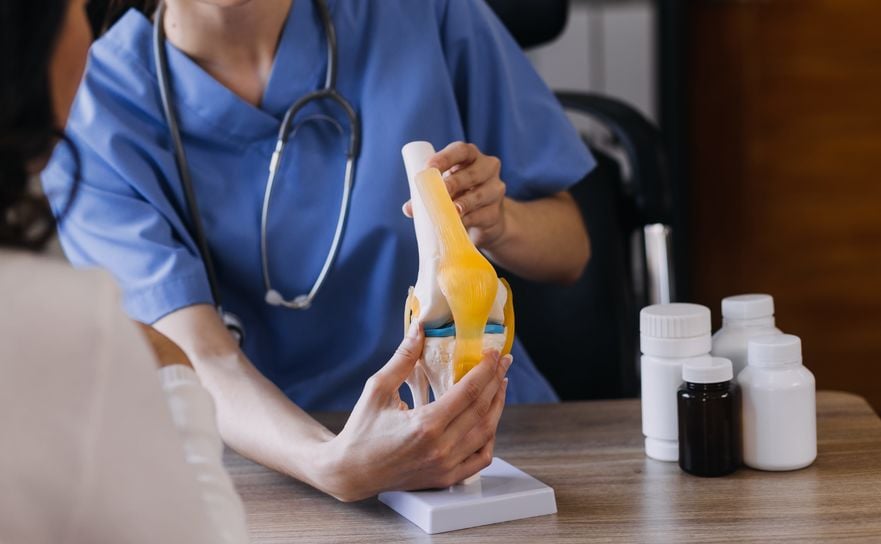
Understanding partial knee replacement
A partial knee replacement involves using a small incision to remove a portion of damaged cartilage or bone in the affected knee. Once the damaged part is removed, the surgeon installs the appropriate metal prosthesis. This may mean installing only the femoral component or tibial component. This remaining bone and cartilage are kept intact. The implant is secured with acrylic cement or pressed into the bone. After installing additional plastic spacers, the surgeon closes the incisions. Partial knee replacement is often performed using minimally invasive surgery (MIS), allowing the patient to leave the hospital the same day and begin recovery at home.
A total knee replacement
This procedure addresses severe knee pain caused by arthritis or injury that no longer responds to treatment. A total knee replacement can be more complex, requiring removal of damaged cartilage and bone of the femur and tibia. The removed bone and cartilage are replaced with femoral and tibial metal components. The surgeon will also remove parts of the underside of the patella to resurface with a smooth plastic component. Additional components, including spacers, may be installed before the surgeon tests the knee and completes the procedure. Once the procedure is completed, the patient can start recovery at home, including physical therapy.
When partial works
A partial knee replacement works when arthritis is isolated to a single part of the knee. Doctors have recognized that the remaining knee components are healthy and functional. A partial knee replacement keeps large parts of bone and tissue intact, helping the knee feel more natural. This patient also has a high possibility of responding well to physical therapy (PT) and recovering faster. At the same time, studies do show that patients with partial knee replacements have a higher risk of additional surgery or turning to TKR later in life.
When is TKR best?
Individuals with significant arthritis and damage to the joint. Doctors have identified multiple areas of damaged cartilage and bone that will continue to be painful. In some cases, the pain is advanced, or the knee has a possible deformity. TKR removes all the damaged tissue and installs a full prosthesis. The procedure provides significant pain relief and restores mobility in severe cases. Patients must be aware that TKR recovery can take longer than partial knee replacement. MIS, including robotic-arm-assisted surgery, can reduce this timeline, but recovery is still significant. The tradeoff is that with proper care, TKR can last 15 years or longer.
The decision is yours
There is no right or wrong answer for the procedures. Both options are effective, but should be applied to the right situation. Choose partial knee replacement when the knee damage is isolated to a specific area, and the rest of the knee is healthy. If there is broad or widespread damage to the knee, TKR is an effective strategy. Work with a surgeon to decide which option is best based on data. Factors like imaging results, degree of pain, patient health, lifestyle, and age can paint a full picture. With the right procedure, pain-free mobility is around the corner.
Recent Posts

Partial vs Total Knee Replacement: Which Is Right?
Partial and total knee replacement can provide substantial relief. Learn which is best for long-term results.
Hip Arthroscopy: Can It Treat Labral Tears And Impingement?
Hip labral tears and impingement may need surgery. Hip arthroscopy is an effective, long-term treatment option.

Meniscus Tear Surgery: When Should Patients Consider Repair?
Meniscus tear surgery is a major decision. Learn the factors that help patients to consider surgical repair.

Rotator Cuff Repair: Restoring Mobility & Relieving Shoulder Pain
Rotator cuff repair can relieve shoulder pain and restore strength. Learn how surgery works, recovery timelines, and when repair may be needed.