Fixing Sinus Issues With Surgery
Minimally invasive surgery solves a range of medical conditions without large scars or long recovery times. A typical example is ongoing sinus issues. Sinuses are 4 sets of hollow spaces located around the nose, eyes, and forehead. Sinuses are the body’s natural air filter, humidifier, and contribute to immune health. Each sinus is lined with mucus, which helps with air filtration. The mucus drains into the nasal cavity daily. Unfortunately, sinuses can become blocked, causing inflammation. This happens when air or mucus is unable to flow out of the sinus properly. For chronic sinus issues, endoscopic sinus surgery or septoplasty may help.
The reason you feel so stuffy
There could be 2 reasons behind sinus issues. The first, rhinosinusitis, happens when the sinuses become blocked due to inflammation. Sinusitis occurs in 11.6% of American adults. With sinusitis, mucus cannot drain into the nasal cavity. The sinuses get filled with fluid or develop nasal polyps. A deviated septum is the second reason. The septum is a piece of cartilage that separates the nasal cavity. If the septum deviates to one side, a host of complications can happen, including sinusitis. Endoscopic sinus surgery treats chronic sinusitis. Septoplasty corrects a deviated septum.
Time to FESS up
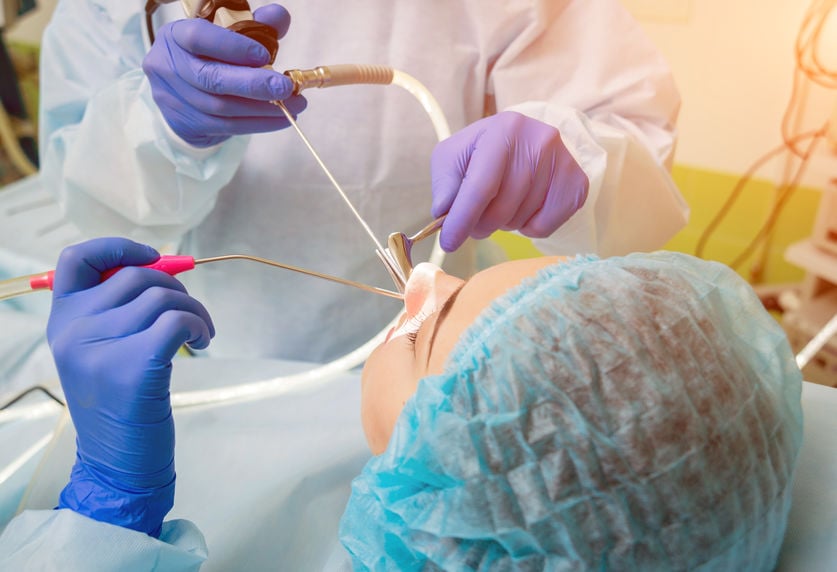
Functional endoscopic sinus surgery, sometimes called FESS, is an outpatient procedure that removes blockages in the sinus. The ENT specialist uses an endoscope, a snake-like tool with a high-powered camera. This gives the surgeon a full view of the sinus without causing further damage to the cavity. With the patient under general anesthesia, the surgeon uses the endoscope to review the inflammation or polyps. From there, the surgeon clears blockages, damaged tissue, and removes any polyps. This allows the sinuses to drain freely again. Full recovery can take 4-8 weeks with regular doctor follow-ups after recovery.
Adjusting a crooked septum with septoplasty
Septoplasty seeks to correct a deviated septum for better breathing and reduced sinusitis. During the procedure, the doctor uses small incisions to remove the septum lining from the cartilage. The surgeon can then remove the deviated cartilage and reattach the lining. In some cases, the doctor will use a replacement piece of cartilage before reattaching the septum lining. Unlike FESS, septoplasty can take from 3-12 months to fully heal.
The pros and cons of surgery
Based on the issue, the doctor will use the appropriate technique to help fight sinus issues. Minimally invasive surgery has the advantage of being quick with faster healing times. However, every surgical procedure, no matter how successful, has some risks. For both procedures, the hazards include bleeding, infection, and damage to the surgical area. These issues are rare, as evidenced by a 90% success rate.
Get minimally invasive sinus help today
For chronic sinus issues or a suspected deviated septum, see an ENT doctor immediately. The doctor will do a full assessment, then try non-surgical options first. If these steps fail, minimally invasive surgery can help. Surgery is a safe way to stop those severe sinus symptoms once and for all. For more information, schedule an appointment with a healthcare provider.
Recent Posts
Hip Arthroscopy: Can It Treat Labral Tears And Impingement?
Hip labral tears and impingement may need surgery. Hip arthroscopy is an effective, long-term treatment option.

Meniscus Tear Surgery: When Should Patients Consider Repair?
Meniscus tear surgery is a major decision. Learn the factors that help patients to consider surgical repair.

Rotator Cuff Repair: Restoring Mobility & Relieving Shoulder Pain
Rotator cuff repair can relieve shoulder pain and restore strength. Learn how surgery works, recovery timelines, and when repair may be needed.

Managing Post-Surgical Pain: The Benefits Of Personalized Care Plans
After surgery, pain management is one of the most important things you need to finalize to help support your recovery.
Recent Posts
Hip Arthroscopy: Can It Treat Labral Tears And Impingement?
Hip labral tears and impingement may need surgery. Hip arthroscopy is an effective, long-term treatment option.
Meniscus Tear Surgery: When Should Patients Consider Repair?
Meniscus tear surgery is a major decision. Learn the factors that help patients to consider surgical repair.
Rotator Cuff Repair: Restoring Mobility & Relieving Shoulder Pain
Rotator cuff repair can relieve shoulder pain and restore strength. Learn how surgery works, recovery timelines, and when repair may be needed.
Managing Post-Surgical Pain: The Benefits Of Personalized Care Plans
After surgery, pain management is one of the most important things you need to finalize to help support your recovery.