
The Powerful Shot To Help With Arthritis
The burning joints. The unbearable pain. And the restricted movement. These are all clear signs of arthritis. Arthritis affects over 50 million American adults. The condition causes inflammation of the joints, and there are over 100 forms of the disease. To ease the pain, doctors may turn to an epidural steroid injection. Steroid injections are useful, but can these shots be continuously relied upon without risk?

Can steroid injections really help?
Osteoarthritis and rheumatoid arthritis (RA) are the most common forms of the disease. While osteoarthritis is the normal wear and tear of the joints, RA is an advanced disease. The immune system attacks the joints, which can cause debilitating pain. Research has shown that RA, in particular, benefits from steroid injections. The injection provides a corticosteroid medication directly to the affected joints. The body naturally produces some corticosteroids, and a synthetic form can be used to reduce inflammation.
Goodbye, pain!
There are different types of steroids. Some are fast-acting but have a short efficacy period. Others take a while to kick in but can last for several months. The most significant benefit is the reduction of inflammation. Some patients are unable to stand, sit, or walk due to pain caused by arthritis. A corticosteroid can reduce pain and improve the quality of life. The most significant benefit is the injection gives the patient time to work on lifestyle changes to minimize arthritis even further. At the same time, all good things come to an end. Steroid injections only work for so long. For several reasons, doctors recommend a set amount of injections per year.
There are limits to steroid injections
Since the goal is to reduce pain, technically, the injections can be administered at any time. However, most doctors recommend no more than 3-4 a year. Doctors will keep to this limit and look for other methods of relief. Injections can happen at almost any joint, tissue, or muscle. However, the constant injections can bring a few unwanted risks.
Beware tissue and skin damage
At the start, patients will see slight color changes and thinning skin at the point of injection. Doctors have noticed tissue and bone damage at the injection site if used excessively. There’s also the chance of infection.
Other side effects
The steroid does a great job reducing inflammation but can raise some other stats too. Some patients may experience blood pressure spikes, especially those with a history of high blood pressure. The same goes for those with diabetes, as shots can increase blood sugar. Bleeding is a sporadic occurrence, happening in less than 1% of patients. Excess bleeding could be a sign of an underlying blood disorder. Seek help from a doctor if there are unfamiliar changes in these stats.
Less pain but a bad mood
With the added artificial hormone, some persons report changes in mood. Excess injections may bring risks of anxiety, irritability, or depression. Some patients may experience insomnia. Pay attention to changes in mood and let a doctor know immediately. Both doctor and patient will need to work on alternative treatment options.
Period changes are a possibility
Some women have reported abnormal periods and excess bleeding while on steroids. The research seems to back this up. Studies show women are almost 3 times as likely to have irregular bleeding or period changes with steroid injections.
Epidural steroid injection is just the start
Persons with arthritis are eager to find a solution to reduce pain and inflammation. Steroid injections have long reduced pain, inflammation, and made patients happy. However, with any treatment, there are risks as well as benefits. These risks increase if the patients have more than 4 injections a year. Doctors will continue to manage the injections and the risks involved. Speak with a doctor for more information.
Recent Posts

Shoulder Labral Tear Symptoms: When To Consider Surgery
A shoulder labral tear causes significant pain. Look for these symptoms and the criteria for pain-relieving surgery.
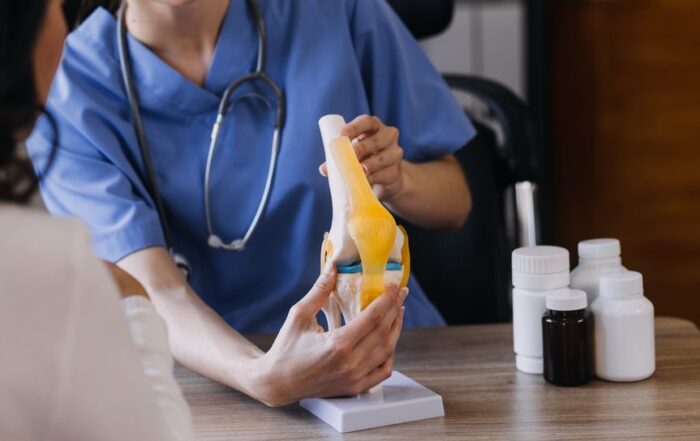
Partial vs Total Knee Replacement: Which Is Right?
Partial and total knee replacement can provide substantial relief. Learn which is best for long-term results.

Hip Arthroscopy: Can It Treat Labral Tears And Impingement?
Hip labral tears and impingement may need surgery. Hip arthroscopy is an effective, long-term treatment option.

Meniscus Tear Surgery: When Should Patients Consider Repair?
Meniscus tear surgery is a major decision. Learn the factors that help patients to consider surgical repair.
Recent Posts
Shoulder Labral Tear Symptoms: When To Consider Surgery
A shoulder labral tear causes significant pain. Look for these symptoms and the criteria for pain-relieving surgery.
Partial vs Total Knee Replacement: Which Is Right?
Partial and total knee replacement can provide substantial relief. Learn which is best for long-term results.
Hip Arthroscopy: Can It Treat Labral Tears And Impingement?
Hip labral tears and impingement may need surgery. Hip arthroscopy is an effective, long-term treatment option.
Meniscus Tear Surgery: When Should Patients Consider Repair?
Meniscus tear surgery is a major decision. Learn the factors that help patients to consider surgical repair.