
A Solution For Hip Pain?
Hip pain in active adults is frequently dismissed as a muscular issue or, in older adults, a natural sign of aging. Many individuals leave hip pain and other symptoms unaddressed. For many individuals who seek medical advice, the true culprit is femoroacetabular impingement (FAI) or a labral tear. These are significant injuries that only worsen if untreated. Some cases require surgery, with hip arthroscopy being the new gold standard for FAI and labral repair. When treated correctly with hip arthroscopy and then managed with physical therapy (PT), movement without hip pain is possible.
FAI and labral hip injuries
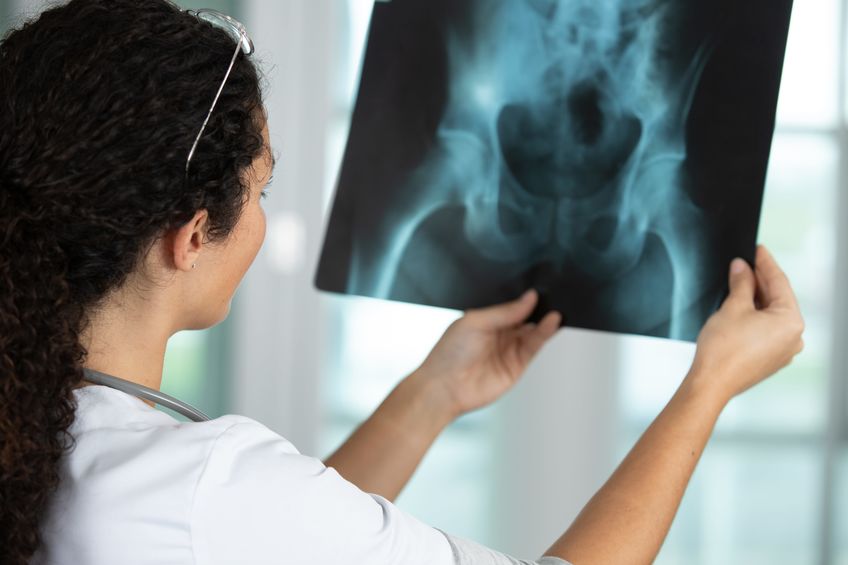
The labrum is the ring of cartilage lining the hip socket that seals the joint, distributes load, and stabilizes the femoral head. FAI occurs when abnormal bone growth on the femoral head or acetabular rim creates an unnatural conflict during movement. For instance, the bone growth grinds against the labrum causing pain. Over time, a hip labral tear can occur. These hip-related conditions can create symptoms such as deep groin pain, a catching or locking sensation, or discomfort during prolonged sitting. Squatting or hip flexion past 90 degrees is also painful and uncomfortable. Stiffness and reduced range of motion (ROM) without an obvious injury are another worrisome sign. People with labral tears will notice worsening symptoms during athletic activity, especially during hip rotations.
Does hip arthroscopy help?
For cases that require surgery, the traditional approach required a large incision along the hip, several inches long. The surgeon would move tissue and muscle to access the damaged hip. Hip arthroscopy is an alternative, minimally invasive surgery (MIS) that allows the surgeon to access the hip joint through small incisions using a camera and specialized instruments. Hip arthroscopy has multiple benefits. Smaller incisions on a major joint like the hip mean less blood loss and a lower risk of complications. As most of the tissue is left intact, recovery is faster, and patients experience less postoperative pain. The minimally invasive nature allows patients to leave the surgical center the same day and recover at home. For the right candidate, hip arthroscopy allows patients to address the underlying issue with less risk, returning to normal activities faster.
Addressing FAI and labral tears
In the context of FAI and labral pathology, hip arthroscopy helps in 2 ways. First, the surgery reshapes the bony anatomy, causing impingement. Next, the surgeon can repair or reconstruct the damaged labrum. Depending on the imaging results, the surgeon may need to perform. Depending on intraoperative findings, the surgeon may perform femoroplasty by contouring the cam lesion on the femoral head. For a pincer-type impingement, the surgeon may trim excess bone in the acetabulum. Hip arthroscopy also helps with labral repair. The surgeon may reattach torn labral tissue to the acetabular rim using sutures or replace damaged labral tissue with a graft when repair is not possible.
Who is a good candidate?
While hip arthroscopy is an effective solution, the procedure may not help in all cases. Arthroscopy performs best in patients with confirmed FAI on imaging with intact or near-intact articular cartilage. Individuals with mechanical symptoms that have not responded to a structured PT program over several months may need surgery. Younger patients who want to return to physical activity faster may benefit from long-term surgery. Age, weight, and injury severity influence surgery technique. Some patients with advanced joint space narrowing or significant damage are less likely to experience relief from arthroscopy alone. These patients need to consider joint preservation or prepare for total joint replacement surgery.
Consider hip arthroscopy
When all conditions are considered, statistics show that hip arthroscopy for FAI and labral repair has high success rates. There is meaningful pain reduction, improved function, and a faster return to sport. This is especially true when compared to traditional hip surgery. Complete, pain-free recovery can take up to 6 months for high-performing athletes or sooner for those returning to daily activities. At the same time, poor outcomes are linked to delayed diagnosis. In other words, the more individuals ignore hip pain, the higher the risk of advanced damage and reduced results. For the right candidate, hip arthroscopy is an effective solution. Take action when symptoms occur and seek guidance from an orthopedic surgeon for long-term relief.
Recent Posts

Meniscus Tear Surgery: When Should Patients Consider Repair?
Meniscus tear surgery is a major decision. Learn the factors that help patients to consider surgical repair.
Rotator Cuff Repair: Restoring Mobility & Relieving Shoulder Pain
Rotator cuff repair can relieve shoulder pain and restore strength. Learn how surgery works, recovery timelines, and when repair may be needed.
Managing Post-Surgical Pain: The Benefits Of Personalized Care Plans
After surgery, pain management is one of the most important things you need to finalize to help support your recovery.
Knee Arthroscopy: What Conditions Can This Procedure Treat?
Knee arthroscopy is a procedure with multiple applications. Learn how this surgery helps different knee conditions.