
Making The Decision To Have Spine Surgery
The decision to have surgery is a big one. However, many surgical options can provide highly effective treatment for chronic back pain. And, fortunately, minimally invasive surgery options make recovery smoother, quicker, and get patients home faster. Patients who have arthritis, a slipped disc, or cervical radiculopathy may want to discuss spine surgery options with an orthopedic surgeon.

1. Arthritis surgery options
Surgery is not the first recommended treatment for arthritis. However, in some patients, noninvasive treatment options fail to provide symptom relief. In these cases, patients with osteoarthritis may consider a vertebral fusion or laminectomy.
During a vertebral fusion, the surgeon places a bone graft between two spinal vertebrae. Typically, within 3-6 months, the bones then grow together, creating a spinal fusion. This can help eliminate the friction between vertebrae that causes arthritic pain. In a laminectomy, the surgeon removes part of the vertebrae to create more space. This procedure is also called decompression surgery and, in some patients, provides significant symptom relief.
2. Repairing slipped discs
A slipped disc is one that moves out of place and presses against the spinal column. In some patients, this condition does not cause many symptoms. However, if a patient experiences a herniated disc at specific locations along the spine, the patient may experience pain, numbness, or tingling in the arms or legs.
One of the most common procedures to treat a herniated disc is the microdiscectomy. In this operation, the surgeon removes the portion of the disc that is putting pressure on the spine. Microdiscectomies use smaller incisions and are less invasive. In some cases, the procedure can even be performed on an outpatient basis, meaning patients can return home the same day.
3. Treatment for cervical radiculopathy
Cervical radiculopathy is a condition in which a nerve root in the spine becomes inflamed or damaged. This can lead to numbness, tingling, or pain anywhere in the arms and legs. The condition can also cause neurological changes such as weakness or decreased reflexes.
The most common procedure for cervical radiculopathy is the anterior cervical discectomy and fusion (ACDF). The goal of this surgery is to stabilize the spine, reduce pain, and restore alignment. During the procedure, the surgeon removes the disc that is causing pain and then performs a spinal fusion to stabilize the spine. Though this can take away some flexibility, ACDF surgery is an effective treatment for chronic pain for many patients.
When is surgery the best treatment?
Surgery is not typically the first recommended treatment. However, in patients who have tried less invasive treatment options without relief, having spine surgery may be the best option. Speak with an orthopedic surgeon to find out more about the risks and benefits of spine surgery for arthritis, slipped discs, or cervical radiculopathy.
Recent Posts
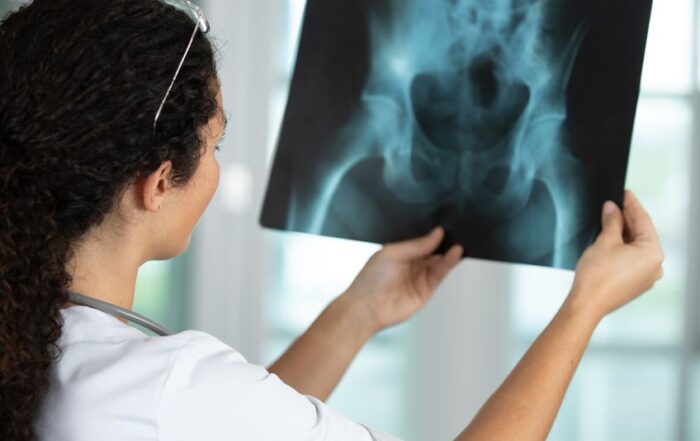
Hip Arthroscopy: Can It Treat Labral Tears And Impingement?
Hip labral tears and impingement may need surgery. Hip arthroscopy is an effective, long-term treatment option.

Meniscus Tear Surgery: When Should Patients Consider Repair?
Meniscus tear surgery is a major decision. Learn the factors that help patients to consider surgical repair.

Rotator Cuff Repair: Restoring Mobility & Relieving Shoulder Pain
Rotator cuff repair can relieve shoulder pain and restore strength. Learn how surgery works, recovery timelines, and when repair may be needed.
Managing Post-Surgical Pain: The Benefits Of Personalized Care Plans
After surgery, pain management is one of the most important things you need to finalize to help support your recovery.
Recent Posts
Hip Arthroscopy: Can It Treat Labral Tears And Impingement?
Hip labral tears and impingement may need surgery. Hip arthroscopy is an effective, long-term treatment option.
Meniscus Tear Surgery: When Should Patients Consider Repair?
Meniscus tear surgery is a major decision. Learn the factors that help patients to consider surgical repair.
Rotator Cuff Repair: Restoring Mobility & Relieving Shoulder Pain
Rotator cuff repair can relieve shoulder pain and restore strength. Learn how surgery works, recovery timelines, and when repair may be needed.
Managing Post-Surgical Pain: The Benefits Of Personalized Care Plans
After surgery, pain management is one of the most important things you need to finalize to help support your recovery.