
When Total Joint Replacement Becomes The Best Option
Sometimes surgery is the best option to treat a patient. Total joint replacement requires superior skill and technique. Many surgeons can do these types of procedures with minimally invasive surgery. In total joint replacement surgery, doctors replace part of or the entire joint with a prosthetic joint. The prosthesis can be made of metal, ceramic, or plastic.
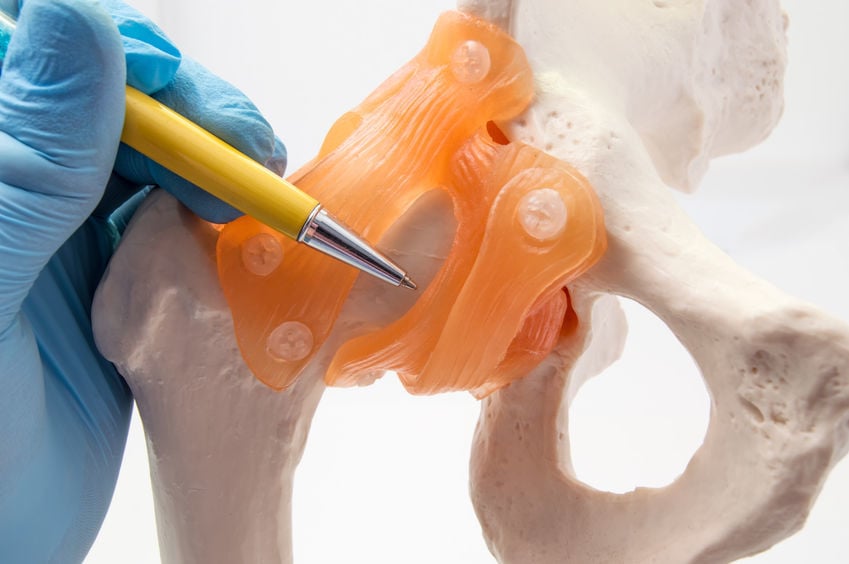
Joints connect to bones
The joints in the body act as connectors, linking one bone to the other while still allowing movement. In total, there are three joint groups: fibrous, cartilaginous, and synovial. Within the synovial group, six different types of joints exist:
- Hinge
- Pivot
- Ball and socket
- Saddle
- Condyloid
- Gliding
Total hip replacement
The hip joint is a synovial ball and socket joint and is one of the most commonly replaced joints. The hip is comprised of two parts, the socket, and the femoral head. When the joint needs replacement, surgeons replace the socket with a prosthesis, add a liner, a ball, and a metal stem.
Joints and rheumatoid arthritis
Rheumatoid arthritis (RA), especially of the hip and knees, is a common condition. As a ball and socket joint, the hip needs cartilage, also known as synovium, to move and perform. Arthritis wears away at the synovium, causing pain. The liner used in joint replacement surgery acts as the buffer between the ball and socket.
RA is an autoimmune disease. Instead of purging foreign invaders, a person’s antibodies attack healthy bodily tissues. In response to the stress, joints become inflamed. Some patients can manage pain through medications. Once permanent damage occurs, joints must be replaced.
Who is affected by RA?
Rheumatoid arthritis affects all age groups, but middle-aged patients suffer most commonly. The disease also affects more women than men. Furthermore, arthritis can spread to other areas of the body like the heart, lungs, or eyes.
Diagnosing arthritis
To diagnose the condition, a doctor performs blood tests such as the cyclic citrulline antibody test and the rheumatoid factor. These tests identify certain antibodies unique to rheumatoid arthritis.
Relief for arthritis pain
For patients struggling with rheumatoid arthritis, total joint replacement can come as a relief to a lifetime of pain. Talk to a physician to learn more about the disease and treatment options.
Recent Posts

ACL Reconstruction: How Long Is The Recovery Timeline?
ACL reconstruction requires extensive recovery. Learn how long this timeline is for effective planning and guidance.

Shoulder Labral Tear Symptoms: When To Consider Surgery
A shoulder labral tear causes significant pain. Look for these symptoms and the criteria for pain-relieving surgery.

Partial vs Total Knee Replacement: Which Is Right?
Partial and total knee replacement can provide substantial relief. Learn which is best for long-term results.

Hip Arthroscopy: Can It Treat Labral Tears And Impingement?
Hip labral tears and impingement may need surgery. Hip arthroscopy is an effective, long-term treatment option.
Recent Posts
Shoulder Labral Tear Symptoms: When To Consider Surgery
A shoulder labral tear causes significant pain. Look for these symptoms and the criteria for pain-relieving surgery.
Partial vs Total Knee Replacement: Which Is Right?
Partial and total knee replacement can provide substantial relief. Learn which is best for long-term results.
Hip Arthroscopy: Can It Treat Labral Tears And Impingement?
Hip labral tears and impingement may need surgery. Hip arthroscopy is an effective, long-term treatment option.

Meniscus Tear Surgery: When Should Patients Consider Repair?
Meniscus tear surgery is a major decision. Learn the factors that help patients to consider surgical repair.