
Why A Knee Replacement?
Replacing an entire knee sounds like a daunting task. But knee replacements are quite common. The goal is to replace the natural joint with a prosthetic one. The procedure helps treat knee arthritis, which is the wear and tear of the joint, or injury. More than 600,000 replacements happen every year. At the same time, the artificial joints can fail or become worn. This begs the question; how long does a knee replacement last?

Out with the old, in with the new
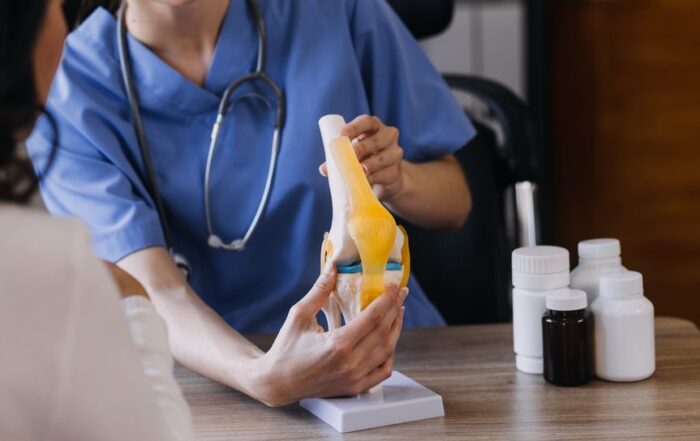
The knee is a joint where the thigh and shin bones meet. Smooth cartilage covers the bones, while the knee cap and ligaments help with flexibility. Sometimes the soft cartilage and bone become worn out. Friction and a lack of shock absorbers cause severe pain. Using a minimally invasive approach, a surgeon cleans the damaged cartilage. Then, the smooth cartilage and knee cap get replaced by artificial parts.
Successful but temporary?
Knee replacement surgery has a high success rate. Most statistics point to a 90% success rate. Furthermore, the artificial parts should last between 15-20 years. Nothing is permanent, and these joints have a shelf life. However, there are reasons for the knee replacement to become worn. There are some times where the joint becomes worn before the expected timeframe.
Why the knee may be worn out
While doctors expect the joint to last, some factors can create a worn joint. Remember, the surgery is not 100% successful, so there is a risk of a knee replacement failure. Infections, stiffness, and surrounding loss of tissue and muscles can cause the joint to wear down before time.
Worn down and possibly out
Patients and doctors alike expect knee replacements to work and work well. But there are occasions when the replacement fails or reaches a particular shelf life. As mentioned before, sometimes, there are surrounding factors that affect the joint. Other times, the knee joint just becomes worn out after the 15-year timeframe. There are a few symptoms patients will recognize. The most significant sign is pain when walking. The joint will also show signs of swelling due to fluid buildup.
Get more help
Persons who suspect a worn joint should seek help immediately. The doctor will ask about symptoms and assess the knee. Further, x-rays and MRIs will reveal the status of the joint. From there, the doctor will recommend the next step in treatment, which may include revision knee surgery.
Don’t leave it up to chance
Persons with knee replacement expect the knee to hold up for years. After all, this is a synthetic replacement that should last. In most cases, knee replacement lasts over 15 years. However, there are times when the joint becomes worn, similar to the natural joint before. Look for signs of worn joint and speak with a doctor immediately.
Recent Posts

Shoulder Labral Tear Symptoms: When To Consider Surgery
A shoulder labral tear causes significant pain. Look for these symptoms and the criteria for pain-relieving surgery.
Partial vs Total Knee Replacement: Which Is Right?
Partial and total knee replacement can provide substantial relief. Learn which is best for long-term results.

Hip Arthroscopy: Can It Treat Labral Tears And Impingement?
Hip labral tears and impingement may need surgery. Hip arthroscopy is an effective, long-term treatment option.

Meniscus Tear Surgery: When Should Patients Consider Repair?
Meniscus tear surgery is a major decision. Learn the factors that help patients to consider surgical repair.
Recent Posts
Shoulder Labral Tear Symptoms: When To Consider Surgery
A shoulder labral tear causes significant pain. Look for these symptoms and the criteria for pain-relieving surgery.
Partial vs Total Knee Replacement: Which Is Right?
Partial and total knee replacement can provide substantial relief. Learn which is best for long-term results.
Hip Arthroscopy: Can It Treat Labral Tears And Impingement?
Hip labral tears and impingement may need surgery. Hip arthroscopy is an effective, long-term treatment option.
Meniscus Tear Surgery: When Should Patients Consider Repair?
Meniscus tear surgery is a major decision. Learn the factors that help patients to consider surgical repair.